
Screwworm Outbreak: Cattle Reproduction and Herd Health Risks
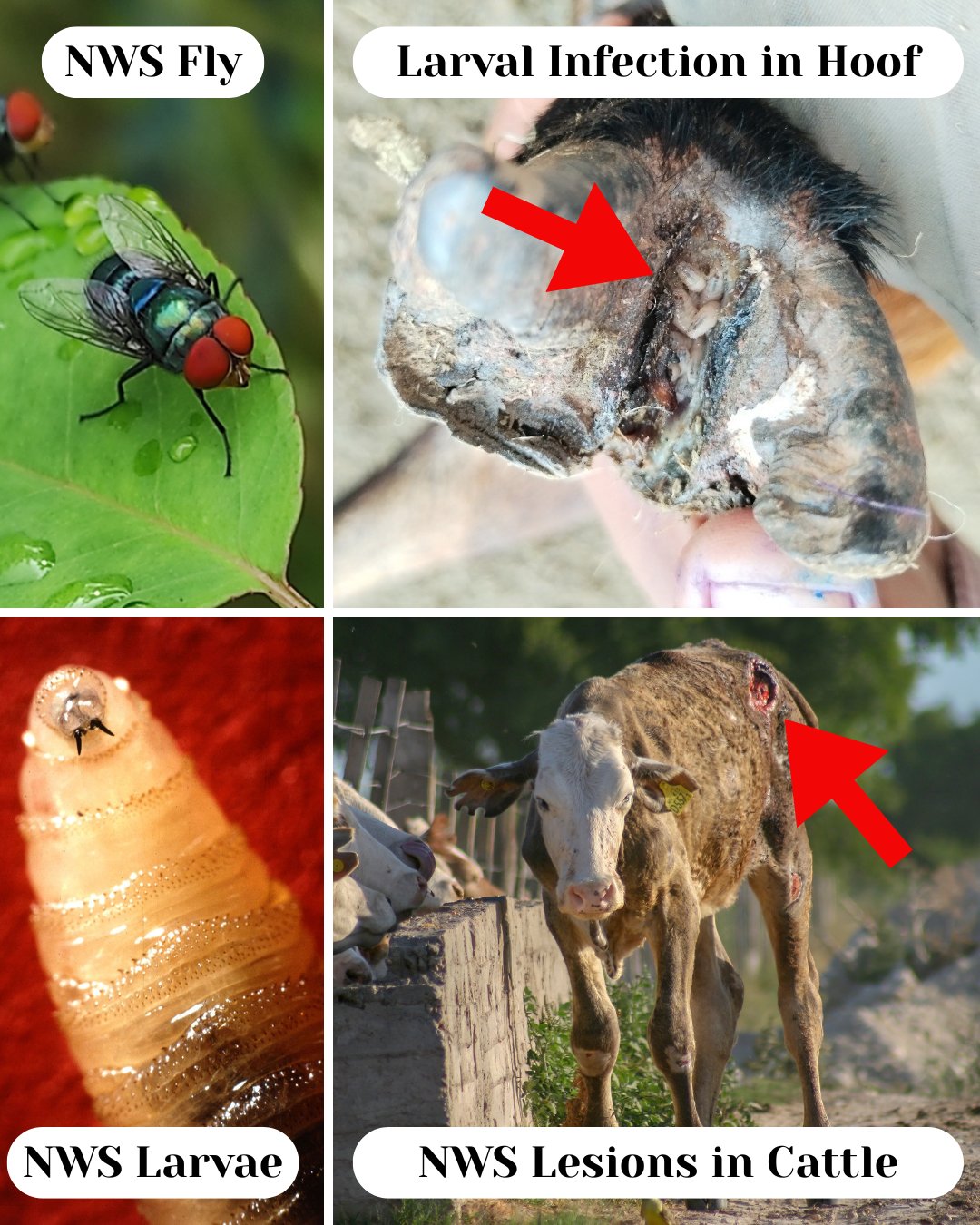
The New World screwworm, Cochliomyia hominivorax, is once again drawing concern across the Americas. Recent detections in Central America and northern Mexico have prompted increased surveillance by U.S. animal health agencies and livestock professionals. While the pest has not yet been confirmed within the United States, its proximity underscores how quickly herd health- and by extension, reproductive success- can be compromised by parasitic infestations.
At the International Embryo Technology School, we emphasize that reproductive efficiency depends on the overall health and welfare of the herd. The current outbreak offers a timely reminder that biosecurity and disease prevention are not isolated from reproduction, they are fundamental to its success.
Biology and Impact of the New World ScrewwormThe New World screwworm is a parasitic fly native to the Western Hemisphere. Female flies deposit eggs along the edges of wounds or on the mucous membranes of warm-blooded animals. In livestock, larvae are most frequently observed in the nasal passages, eyes, mouth, umbilical stumps of newborns, and preexisting wounds. Within 12 to 24 hours, the eggs hatch, and the larvae begin feeding on living tissue, creating deep, foul-smelling lesions that can expand rapidly. Without prompt treatment, infestations result in extensive tissue destruction, secondary infection, and, in severe cases, death.
Screwworms have a broad host range that includes cattle, horses, sheep, goats, swine, wildlife, and humans. The economic impact of an established infestation is significant. Losses result from reduced weight gain, lower conception rates, animal mortality, and increased treatment and labor costs. Historically, infestations in the southern United States caused annual losses exceeding $200 million prior to eradication.(ref #1)
Current Outbreak StatusAs of late 2025, the United States remains free of screwworm infestation. However, the pest has been confirmed across multiple Central American countries and in several northern Mexican states. The Panama–United States Commission for the Eradication and Prevention of Screwworm (COPEG), which operates a sterile insect release program, continues to work to contain and suppress these populations.
In August 2025, a travel-associated human case was reported in the United States, involving an individual who returned from El Salvador.(ref #1) While this case does not indicate domestic transmission, it reinforces the importance of maintaining surveillance and veterinary awareness at ports of entry and along the southern border. Currently, the USDA-APHIS is proactively monitoring nearly 8,000 fly traps across Texas, Arizona, and New Mexico for the New World Screwworm flies. (ref #2) As of September 2025, no flies have been detected. (ref #2) If screwworms were to reestablish within the U.S., the economic cost to the beef and dairy industries could reach hundreds of millions of dollars annually. The USDA’s Animal and Plant Health Inspection Service (APHIS) has intensified border monitoring, import restrictions, and collaboration with Extension specialists to prevent reintroduction.
Reproductive Consequences of Parasitic InfestationHealth and reproduction are inherently connected. Wound myiasis, whether caused by screwworms or other parasitic species, creates physiological stress that can suppress fertility. The inflammatory and immune responses associated with active infections alter hormonal balance, decrease feed efficiency, and may interfere with follicular development and conception.
For operations involved in artificial insemination (AI) or embryo transfer (ET), the implications are even greater. Donor and recipient animals require strict health management to ensure viable embryos and successful implantation. Open wounds from injections, tagging, dehorning, or calving provide ideal sites for flies to deposit their eggs during screwworm outbreaks. Preventing and promptly treating these wounds are essential components of reproductive herd management.
Biosecurity and Prevention PracticesThe same biosecurity measures that protect herds from reproductive diseases such as trichomoniasis, bovine viral diarrhea (BVD), or leptospirosis also help prevent screwworm establishment.
Recommended practices include:- Inspect livestock frequently for fresh wounds, swelling, or discharge.
- Treat all wounds promptly with appropriate antiseptics and fly repellents.
- Implement fly control programs that target both adult and larval stages.
- Quarantine and examine newly introduced animals for at least 30 days prior to introduction.
- Maintain detailed health and treatment records for traceability.
- Report suspicious lesions to a veterinarian or state animal health official immediately.
Travelers and veterinarians returning from outbreak areas should take additional precautions to prevent accidental transport of larvae or eggs on clothing, animal products, or equipment.
Integrating Health and Reproduction at the International Embryo Technology SchoolInternational Embryo Technology School trains students and producers in advanced reproductive technologies, including synchronization, artificial insemination, embryo collection and transfer, and ovum pick-up. However, each procedure begins with a fundamental understanding of animal health and welfare.
Our courses stress the importance of minimizing wound exposure, maintaining clean working environments, and implementing disinfection protocols between animals. Students learn that any compromise in animal health can alter reproductive outcomes—from reduced conception rates to delayed postpartum recovery.
By coupling reproductive training with herd-health education, the International Embryo Technology School aims to prepare technicians and producers who can recognize early disease indicators, implement preventive strategies, and maintain sustainable herd productivity. The current screwworm situation reinforces this approach: even a highly skilled technician cannot achieve reproductive success without healthy, stress-free animals.
Lessons from Eradication and SurveillanceThe historical eradication of screwworm from the United States remains one of the landmark achievements in animal health.(ref #3) The success relied on the sterile insect technique, a biological control method in which laboratory-reared male screwworm flies were sterilized—typically through low-dose radiation—and then released over infested regions in massive numbers. When these sterile males mated with wild females, no viable offspring were produced, gradually driving down the population. Because female screwworms mate only once in their lifetime, the continued release of sterile males eventually led to the complete collapse of wild populations across the southern United States.
This same approach remains the foundation of prevention programs today. COPEG operates a large-scale sterile fly production facility in Panama that serves as a biological barrier to stop northward spread from South America. Continued investment in sterile fly production, regional surveillance, and rapid-response capacity will be critical to prevent reintroduction. Producers also play an essential role in this network by remaining vigilant, monitoring for suspicious wounds, and practicing strong herd-health management to protect against potential outbreaks.
The Broader Message for Producers and PractitionersScrewworms represent more than a parasitic threat—they highlight the interconnected nature of animal health, reproduction, and management. Successful breeding programs depend not only on synchronization schedules or semen quality, but on the daily welfare and health of each animal.
As the industry advances in reproductive technologies, from in vitro fertilization to genetic selection, these innovations must remain grounded in strong herd-health fundamentals. Preventing disease is not only an ethical obligation but also a prerequisite for reproductive efficiency and economic sustainability.
ConclusionThe screwworm outbreak to the south of the United States serves as a critical reminder that vigilance in herd health is inseparable from reproductive success. Maintaining strict biosecurity, prompt wound care, and continuous producer education will protect both livestock productivity and animal welfare.
For reproductive specialists, veterinarians, and producers alike, prevention remains the best investment. The same attention to detail that drives success in embryo transfer—clean technique, animal observation, and recordkeeping—is equally vital in preventing the return of one of the livestock industry’s most damaging parasites.
References:- Hailu, K.T., A. Kasagga, and R.R. Haddad. 2025. The New World Screwworm in the United States: A narrative review anchored to the 2025 travel-associated human case. Cureus 17(10): e94039/ DOI: 10.7759/cureus.94039
- USDA-APHIS. 2025. New World Screwworm. U.S. Department of Agriculture. Access: https://www.aphis.usda.gov/livestock-poultry-disease/cattle/ticks/screwworm
- Wyss. J.H. 2000. Screwworm eradication in the Americas. Annals of the New York Academy of Sciences, 916(1): 186-193
Better genetics start with the breeding tools to use them. Our hands-on cattle artificial insemination training course and Combined AI & Embryo Transfer Training Course teach producers to breed their own cows in Senatobia, Mississippi, with no prior experience required.

|
|
|