Out-of-the-Box Breeding Strategies Made Possible by Embryo Transfer
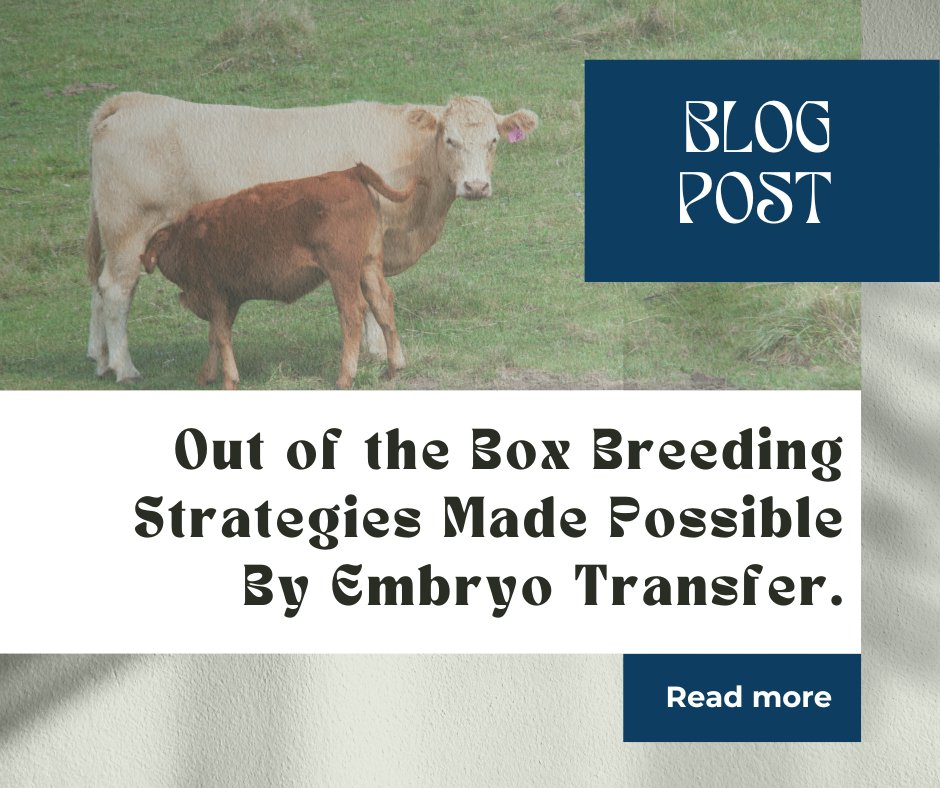
Embryo Transfer lets any recipient cow carry elite genetics from another breed—boosting flexibility, profit, and breeding options for cattle producers.
When most people think about embryo transfer (ET), they think about multiplying the genetics of an elite female. While that is certainly one of the greatest advantages of ET, it is far from the only one. One of the most overlooked benefits of embryo transfer is the flexibility it creates in breeding programs. By allowing one female to provide the genetics and another to carry the pregnancy, ET gives producers nearly endless breeding opportunities. Instead of being limited by the genetics of the cows currently in the herd, producers can select embryos from virtually any breed or genetic line and transfer them into available recipient females. This flexibility allows operations to adapt to changing goals, markets, and production systems in ways that would be impossible through conventional breeding alone.
Simply put, the cow carrying the pregnancy does not have to be genetically related to the calf she delivers.
That concept may seem obvious to embryo transfer practitioners, but it can be revolutionary for producers who are new to reproductive technologies. Once you understand that a recipient cow can carry virtually any embryo, entirely new management and breeding opportunities become available.
The Recipient Cow Is Just the Surrogate
In a traditional breeding system, a cow contributes half of the calf's genetics and carries the pregnancy. Those two roles are inseparable. The cow is both the genetic mother and the gestational mother.
Embryo transfer changes that relationship.
With ET, the genetics come from the donor female and the selected sire. The recipient cow contributes no genetic material to the resulting calf. Her role is simply to provide the environment necessary for pregnancy and fetal development.
This means a commercial Angus recipient can carry a Highland embryo. A Holstein recipient can carry a Simmental embryo. A crossbred beef recipient can carry a full-blood Wagyu embryo. As long as the recipient is healthy, cycling normally, and properly synchronized, the genetic breed of the embryo often matters far less than many producers initially assume.
The calf born will be genetically identical to what would have been produced if the donor cow had carried the pregnancy herself.
Using Commercial Cows to Produce High-Value Genetics
One of the most common applications of ET is using commercial cows as recipients for elite genetics.
Consider a producer with a group of productive commercial Angus cows. Traditionally, those cows would produce commercial Angus calves each year. Through embryo transfer, however, those same cows could instead carry embryos from elite donor females and top-performing sires.
Suddenly, the same pasture, labor, and feed resources that once produced commercial calves can be used to produce registered seedstock, show cattle, performance genetics, or specialty breed calves.
The recipient cows become a vehicle for expanding superior genetics without requiring additional donor females.
This approach allows producers to maximize the productivity of cows that may not possess elite genetics themselves but excel at maintaining pregnancies and raising calves.
Dairy Cows Raising Beef Genetics
One of the fastest-growing examples of out-of-the-box thinking involves the dairy industry.
Many dairy producers now use beef semen to create higher-value beef-on-dairy calves. Embryo transfer takes this concept a step further.
A Holstein cow can successfully carry embryos from beef breeds such as Angus, Simmental, Charolais, or Wagyu. In this scenario, the dairy cow serves as the surrogate while producing a calf with entirely different genetic objectives than her own.
For operations with excess recipient capacity, ET can transform animals traditionally viewed as dairy replacements into tools for producing premium beef genetics.
Likewise, beef producers can utilize dairy recipients when recipient availability becomes limited.
The result is a level of flexibility that simply does not exist in conventional breeding programs.
Preserving Rare and Specialty Breeds
Embryo transfer also plays a valuable role in conserving unique or less common breeds.
For example, a producer interested in expanding a Highland, Texas Longhorn, Dexter, or other specialty breed herd may have only a limited number of registered females available. Instead of waiting for those females to produce one calf per year, embryos can be collected and transferred into commercial recipient cows.
This strategy accelerates genetic multiplication while preserving valuable donor females from the stress and risk associated with repeated pregnancies.
In many cases, commercial recipients become the engine that allows small populations to grow rapidly. Additionally, using commercial recipient breeds can offer reproductive advantages. Breeds such as Angus, Charolais, and Herefords often achieve higher embryo transfer pregnancy rates than some specialty breeds, particularly miniature cattle. By transferring embryos from specialty or miniature breeds into proven commercial recipients, producers may be able to improve pregnancy success while simultaneously expanding valuable genetics.
Managing High-Risk or Valuable Donors
Another advantage of ET is the ability to reduce reproductive demands on highly valuable females.
Imagine a donor cow that is a national champion, elite genetic producer, or aging female with significant genetic value. Carrying a pregnancy may not be the most efficient use of her reproductive potential.
Instead, embryos can be collected from that donor and transferred into recipient cows. The donor can continue producing embryos while recipients carry the pregnancies.
This strategy allows producers to generate more offspring from valuable females while reducing some of the risks associated with gestation and calving.
The donor contributes genetics. The recipient contributes maternal capacity.
Each animal performs the role she is best suited for.
Matching Genetics to Market Opportunities
Embryo transfer also allows producers to respond quickly to changing markets.
Suppose a producer has a large, reliable recipient herd but wants to enter a niche market such as Wagyu, club calves, registered seedstock, or specialty breeds. Purchasing an entire herd of breeding females can be expensive and time-consuming.
Embryos offer an alternative.
A recipient herd can be used to produce whatever genetics best fit market demand. If opportunities change, the genetics being transferred can change as well.
In one year, recipients may carry Angus embryos. The following year, they may carry Simmental, Hereford, Wagyu, or crossbred composite embryos.
The recipient herd remains the same, while the genetic product adapts to market conditions.
Thinking Beyond Traditional Breeding
Embryo transfer is often viewed as a tool for elite seedstock operations, but its true power lies in flexibility. ET allows producers to separate genetics from pregnancy and rethink how cattle are utilized within an operation.
A commercial Angus cow can raise a Highland calf. A Holstein can deliver a Wagyu calf. A recipient herd can produce genetics from virtually any breed or breeding objective.
Once producers realize that a cow's genetic makeup does not limit the genetics of the calf she carries, entirely new opportunities emerge.
The question is no longer, "What kind of calf can this cow produce?"
Instead, the question becomes, "What kind of genetics do I want this cow to carry?"
That shift in thinking is one of the most powerful advantages embryo transfer has to offer.
You can view upcoming courses here: Bovine Reproduction Courses
If you are new to cattle reproduction, the Combined AI & Embryo Transfer Training Course is the place to start: 1.5 days of artificial insemination followed by the full bovine embryo transfer course, all hands-on in live cows, no prior experience required.

|
|
|