
Managing Fescue Pastures in the Cool Season
A Guide for Cow–Calf Producers
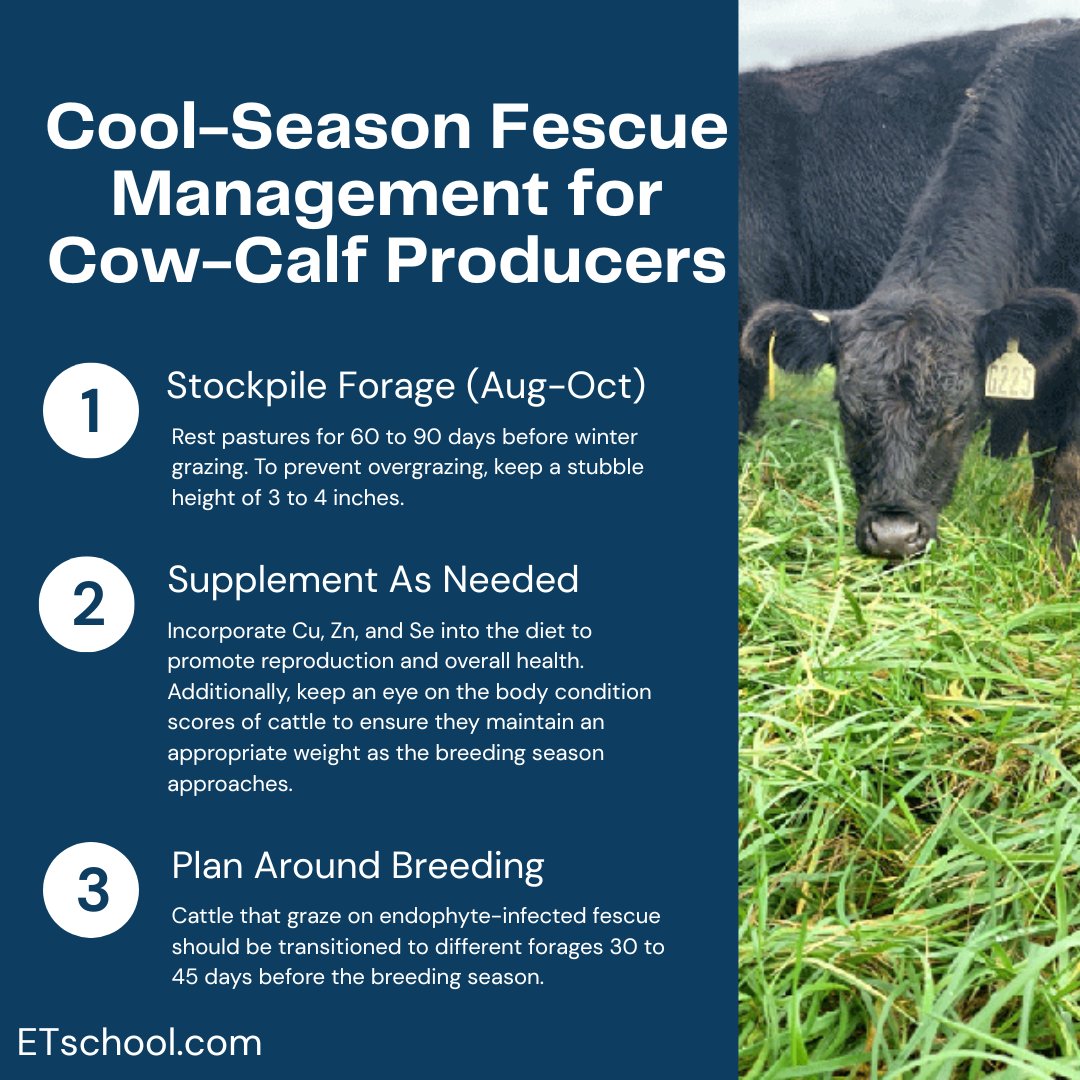
As temperatures drop across the South and Midwest, cool-season forages like tall fescue become the backbone of many cow–calf operations. Whether you manage a small herd in Mississippi or a large breeding program in the Midwest, understanding how to manage fescue pastures during the cool season is essential for maintaining cow body condition, supporting reproductive success, and minimizing feed costs.
At the International Embryo Technology School, we work with producers from across the U.S. who want to enhance the genetics of their herds through embryo transfer and other reproductive technologies. No matter how advanced your breeding program is, it all starts with good forage management, and fescue plays a central role in that success.
Why Fescue Dominates Cow–Calf Systems
Tall fescue (Festuca arundinacea) is one of the most widely used cool-season perennials in the eastern half of the U.S. It thrives in areas that experience mild winters and hot, humid summers, making it a perfect fit for regions like Missouri, Mississippi, Arkansas, Tennessee, and Kentucky.
Fescue’s strengths include:- Excellent tolerance to drought, overgrazing, and heavy traffic
- Long growing season (fall through late spring)
- Good ground cover and erosion control
- The ability to be stockpiled for winter grazing
However, not all fescue is created equal. Most older stands are endophyte-infected, meaning the grass contains a fungus that improves plant hardiness but also produces ergot alkaloids, compounds that can harm cattle productivity. These alkaloids restrict blood flow, reduce appetite, and interfere with normal hormonal and reproductive function.
Cows grazing infected fescue may show signs such as rough hair coats, heat intolerance, poor weight gain, and lowered conception rates, all of which hurt cow–calf profitability.
Cool-Season Advantage: Turning Fescue into a Feed Asset
The good news is that cool-season grazing reduces many of the risks associated with endophyte toxicity. As temperatures fall, alkaloid levels decline and fescue quality improves, making late fall through early spring an ideal time to rely on these pastures.
Managed properly, cool-season fescue can:- Extend grazing days, reducing hay and feed costs
- Maintain cow body condition before calving or breeding
- Support milk production for fall-calving herds
- Provide high-quality forage for replacement heifers and developing bulls
In cow–calf systems, these benefits directly translate to better reproductive efficiency, fewer open cows, and healthier calves entering the next production cycle.
Step 1: Stockpile for Winter GrazingStockpiling is one of the most efficient ways to use fescue. By allowing pastures to grow in late summer and early fall, and deferring grazing until November or December, producers can build a reserve of high-quality forage for the cold months when other grasses are dormant.
Here’s how:- Clip or graze the pasture in late August to remove mature stems and reset growth.
- Apply nitrogen fertilizer (40–80 lb N/acre) if soil fertility allows.
- Rest the pasture for 60–90 days to accumulate growth.
- Begin strip or rotational grazing in late fall, allocating a few days’ worth of forage at a time.
Stockpiled fescue retains nutrients better than most hay, often testing around 12–16% crude protein and 60–65% TDN well into winter. For cow–calf herds, this means you can maintain condition through gestation without heavy supplementation.
Step 2: Prevent OvergrazingWhen fescue is grazed too short (below 3–4 inches), plants lose their ability to regrow and store carbohydrates in their roots. This weakens the stand and reduces spring productivity.
For cow–calf operations, overgrazing also has nutritional consequences. Thin cows struggle to rebreed after calving, and undernourished replacement heifers may reach puberty later.
Tips for prevention:- Rotate pastures and rest fields between grazings.
- Monitor residual height — leave at least 3 inches of stubble.
- Avoid grazing when soils are saturated or frozen to reduce compaction.
Healthy fescue stands will reward you with thicker spring growth and more consistent forage availability.
Step 3: Manage Endophyte ExposureEven in cool weather, the effects of fescue toxicity can linger, particularly in heavily infected stands. To mitigate this:
- Dilute the diet with legumes (clover, lespedeza) or warm-season forages.
- Supplement cattle with grain or byproduct feeds during breeding or calving to offset reduced intake.
- Provide mineral supplements formulated for fescue-based systems, ensuring adequate copper, zinc, and selenium levels.
- If feasible, renovate older pastures with novel-endophyte fescue varieties such as Jesup MaxQ II, which maintain persistence without toxic alkaloids.
Cattle on infected fescue may still perform adequately during the cool season, but it’s wise to rotate them periodically onto “clean” forages, especially donors, recipients, or young breeding stock, at least 30 days before breeding season.
Step 4: Align Forage Growth with Herd NeedsMatching forage availability with cow nutritional demands is the cornerstone of reproductive success.
- Fall-calving herds: Cool-season fescue provides a great forage base for lactating cows and young calves. Supplement only as needed to maintain body condition.
- Spring-calving herds: Winter stockpiled fescue maintains gestating cows inexpensively, while lush spring growth provides excellent forage ahead of breeding. If grazing heavily endophyte infected fescue, blood restriction during late gestation can cause early delivery or smaller calves.
- Embryo transfer programs: Donor and recipient cows require consistent nutrition for optimal hormone balance and embryo viability. Grazing high-quality fescue in the cool season supports these goals, provided energy and mineral needs are met.
Fescue management and reproduction go hand in hand. Studies have shown that cows grazing endophyte-infected fescue often exhibit lower conception rates and reduced embryo survival compared to cows on endophyte-free or novel-endophyte stands.
To mitigate these effects:- Transition breeding stock to clean forage (such as bermudagrass, ryegrass, or clover-mixed pastures) at least 30–45 days before breeding or ET work to reduce alkaloid impact.
- Provide consistent, high-quality nutrition with adequate energy intake; fluctuating intake from toxicity or poor forage quality suppresses estrus expression and conception.
- Use targeted mineral supplementation—especially copper, zinc, and selenium—to improve uterine environment and embryo viability.
- Avoid heat stress when possible, as fescue toxicity compounds its effects on blood flow and thermoregulation.
- Consider novel-endophyte renovation or interseeding legumes to dilute infected forage over time.
Producers aiming to flush donor cows, synchronize estrus, or breed recipients should monitor body condition (target BCS 5–6), mineral intake, and pasture conditions. Integrating forage management into your reproductive calendar ensures cattle remain on a steady nutritional plane before and after breeding or ET work—especially critical when scheduling embryo collections or transfers in late winter or early spring.
Why It MattersFor cow–calf producers, efficient grazing management directly impacts profitability. Every additional day cattle graze instead of eating stored feed saves money. But more importantly, cows in proper body condition breed back faster, calve easier, and produce healthier calves, all of which influence your bottom line and your genetic progress.
At the International Embryo Technology School, we teach that reproduction is not just about hormones and handling—it’s about management systems that support reproductive efficiency. Grazing management, nutrition, and cow comfort all play major roles in conception success, embryo development, and calf performance.
Final ThoughtsFescue is one of the most dependable cool-season grasses in U.S. cow–calf systems. When managed correctly, it provides abundant, cost-effective forage through the cooler months. By balancing grazing pressure, addressing endophyte challenges, and aligning forage quality with herd needs, producers can turn fescue pastures into one of the most valuable tools on their ranch while maintaining reproductive efficiency.
Better genetics start with the breeding tools to use them. Our hands-on cattle artificial insemination training course and Combined AI & Embryo Transfer Training Course teach producers to breed their own cows in Senatobia, Mississippi, with no prior experience required.

|
|
|