
Retain or Sell Replacement Heifers? Running the Numbers in a Record Cattle Market
Every fall the heifer calves line up at the sorting gate and the same question comes up: which ones do you keep?
This year that question has more money riding on it than it has in a generation. Feeder heifers are bringing record prices, bred heifers are bringing even more, and the national herd is still short of the females it needs to rebuild. Here is how to think it through.
How tight are replacement heifers right now?
Tight. The country started 2026 with about 4.7 million beef replacement heifers - the second-lowest number since the 1940s, behind only 2025. Beef cow slaughter fell about 18% in 2025 and nearly 17% more in the first half of 2026, but University of Florida economist Hannah Baker notes that culling fewer cows is only half of rebuilding. Producers also have to keep heifers, and those efforts have been slow.
That scarcity cuts both ways. It makes a heifer calf worth a lot at the sale barn today, and it makes a bred heifer expensive to buy back later.
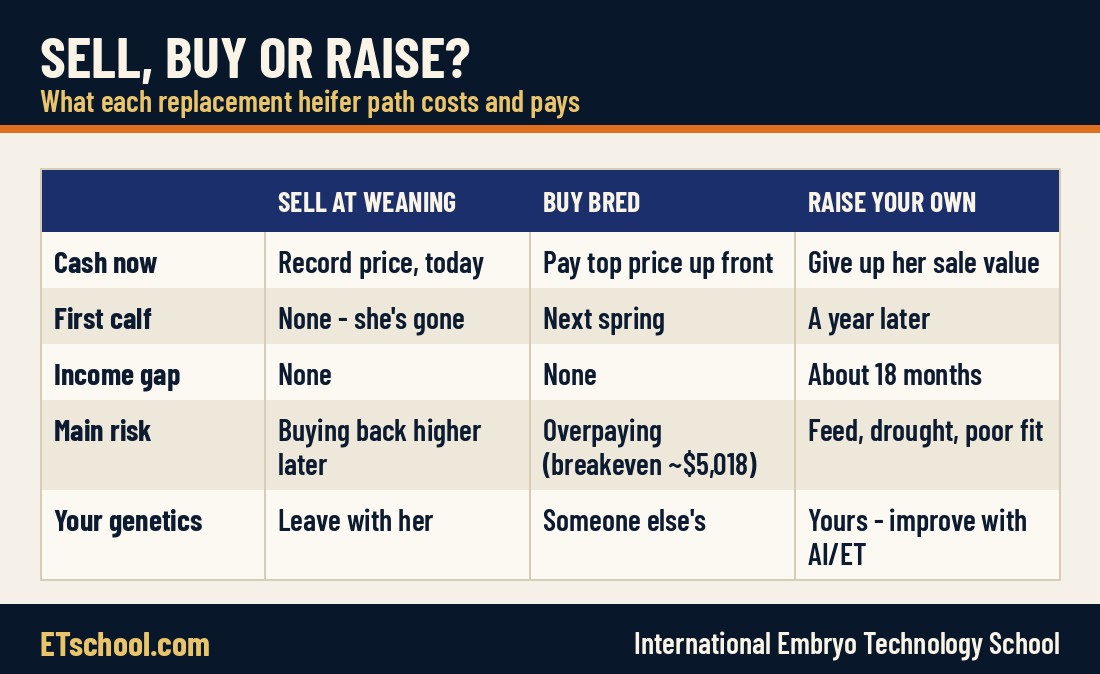 Sell, buy or raise: what each path costs and what it pays.
The three choices
Sell her at weaning. The cash is immediate and the price is strong. The cost is that you will need a replacement from somewhere eventually, and you will be buying it in the same tight market.
Buy a bred heifer. You skip a year of development and she calves next spring. The cost is paying today's price up front. A University of Arkansas dashboard released this summer puts the breakeven at about $5,018 a head - the most you could pay and still earn an 8% return, under its default assumptions of a 92% weaning rate, 520-pound calves, $1,100 a year in cow costs and an eight-year productive life. It is also worth knowing that CattleFax figured it took only about 2.75 calves in 2025 to pay for a bred female, against a long-term average of 4.5.
Raise your own. Cheaper up front, but not free. As Arkansas economists James Mitchell and Ryan Loy put it, raising means giving up what the calf would have sold for at weaning, covering a year of expenses and waiting an extra year for her first calf. You go roughly 18 months without income from that female.
Questions to ask before you keep her
Baker suggests three:
- Why do I want to retain heifers - genetics, biosecurity from not buying in, or expansion?
- How quickly do I need calf revenue? A retained heifer delays income by about 18 months.
- Could I keep only a portion? Developing a few more than you need, keeping the best and marketing the rest as bred heifers can pay both ways.
We would add one more: is she actually the right female to keep? A heifer is a ten-year decision. Keeping her because she is there, rather than because she is good, is how herds stay average.
The fastest way to rebuild quality
Here is the part most heifer budgets leave out. If you retain heifers, you are choosing which genetics carry your herd for the next decade. There are two ways to raise the bar quickly.
Artificial insemination puts proven, high-accuracy sires on your heifers for the cost of a straw, and lets you use calving-ease bulls on first-calf heifers without owning one.
Embryo transfer goes further. Instead of waiting for your best cow to give you one heifer a year, you flush her and put her embryos into your commercial females. The heifers you would have bred anyway become recipients carrying your top genetics. In a market that pays for quality females, a handful of embryo calves from your best donor can move a herd further in one year than natural service moves it in several.
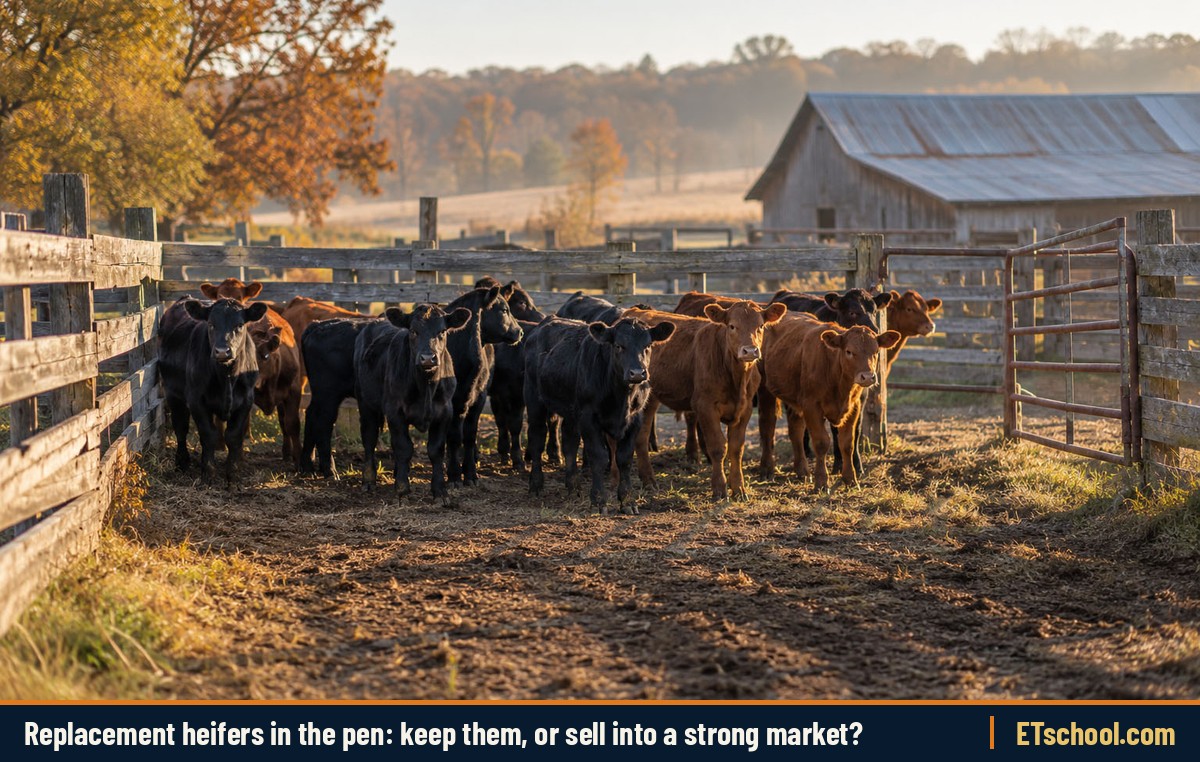 Sorting heifers in the fall: keep, breed or sell into a strong market?
Do the math for your own place
The figures here are averages. Your forage, your cow costs, your calving percentage and your cash position decide the answer, so run your own numbers through the free Arkansas Beef Cow and Heifer Investment Analysis dashboard. And be honest about feed: more than half the country was in drought this summer, particularly across the Southeast and West, and a heifer you cannot feed is not an asset.
Learn to breed your own replacements
Whichever way you go, the producers who come out ahead in a rebuild are the ones who control their own genetics. You don't need to be a veterinarian to take our courses - they are open to anyone 18 or older, and the International Embryo Technology School has been teaching embryo transfer for over 35 years.
- Our Combined AI and Embryo Transfer course teaches both - cattle artificial insemination first, then cattle embryo transfer - with no prior experience required. It is the fastest route to breeding your own replacements.
- Already competent at AI? The Comprehensive Bovine Embryo Transfer course is 4.5 days of hands-on training in flushing, grading, freezing and transfer.
- Just starting out? Our cattle artificial insemination training course has no prerequisites and requires no prior experience.
You will learn a skill you can use on your own herd and, in some states, offer as a service - the rules vary by state, so check yours.
References

|